

Scratched glasses are the worst. One minute you’re seeing the world clearly, the next you realize you’re squinting through a blurry constellation of tiny regrets.
Naturally, the internet is overflowing with “easy fixes” promising to make scratches disappear using things you already have at home. Toothpaste. Baking soda. Sunscreen. Sandpaper (yes, really). So we did what any responsible eyewear nerd would do. We scoured (pun very much intended) the internet, tested the logic behind these hacks, and talked to industry experts.
Spoiler alert: if it sounds too good to be true, it probably is.
Most so-called scratch removal methods don’t actually remove scratches. They remove lens material or coatings. And once those are gone, they’re gone for good. Let’s break down what you’re actually dealing with, what’s (if anything) safe to try, and the one solution that truly works.
First Things First: Is It Even a Scratch?
Before you reach for the toothpaste, it helps to know what you’re looking at. Not everything that looks like a scratch actually is.
Smudges or Residue: Oils, sunscreen, salt spray, makeup, and dust love to cling to lenses. These usually disappear with proper cleaning. Quick fix: Rinse with water or spray with a lens-safe cleaner, then wipe gently with a microfiber cloth.
Coating Damage: This often looks like streaks, hazy patches, or fine lines that won’t wipe away. Anti-reflective, mirrored, or hydrophobic coatings are common culprits. The harsh reality? Once a coating is damaged, it can’t be repaired.
Light Surface Scuffs: Very minor marks that catch light at certain angles but don’t affect vision much. Unfortunately these usually involve the coating, not just the surface, and can’t be repaired with an at-home, from-the-internet, quick-fix.
Deep Scratches: You can feel these with a fingernail. They distort vision and are permanently etched into the lens. No DIY fix will remove these without compromising optical clarity. If you’re unsure which category you’re in, err on the side of caution. Most scratches involve coatings, and once you start removing material, there’s no undo button. Are you starting to see a theme here with the coatings?
The Internet’s Favorite Scratch “Fixes” (Myths-Busted)
What all those viral tutorials fail to mention is that in the process of trying to save your lenses you’re actually ruining them, and most times you can’t get the scratch out at all.
Method 1: Toothpaste or Baking Soda
This one shows up everywhere. And yes, technically, there’s a reason for that.
Toothpaste and baking soda contain mild abrasives. In theory, enough rubbing could wear the lens surface down until it matches the depth of the scratch. In reality? That would take an incredible amount of time, pressure, and patience.
You’re dealing with micro-abrasives gentle enough for your teeth. If you think they’ll fix a scratch in one go—or twenty—they won’t. What’s actually happening is you’re slowly wearing down the coatings first and then the lens material, ultimately leaving cloudy patches or distortion.
Verdict: Temporary, risky, and ultimately disappointing. If you have the patience of a Zen master and are good with lackluster results, you might give it a whirl. Otherwise, let’s move on.

Method 2: Sunscreen
This one technically “works.” Kind of.
Sunscreen can remove mirror coatings from lenses. If the scratch only exists in the mirrored layer, removing the entire coating may make the scratch less visible.
But here’s the catch. You can’t spot-treat mirror coatings. It’s all or nothing. What you’d actually have to do is strip the entire mirror layer, altering appearance, tint, and light transmission.
Worse, on lenses with UV protection, you may also remove UV coatings. And here’s where things get genuinely unsafe. Dark lenses, i.e. the sunglasses, cause your pupils to dilate. So with dilated pupils and no UV protection, more harmful rays reach your eyes, increasing the risk of long-term damage like cataracts and macular degeneration. Definitely a no-go “solution”.
Verdict: High risk, permanent changes, not recommended.
Method 3: Glass Etching Cream
Ironically, this shouldn’t actually be used on glass lenses. You’d think from the name that you were safe, but yeah, no.
Glass etching cream contains hydrofluoric acid, which strips coatings from plastic lenses. You don’t get to choose which coatings stay. Anti-reflective, hydrophobic, scratch resistance, UV protection. If you strip one, you strip them all.
Verdict: Extremely aggressive. Not safe for lenses.
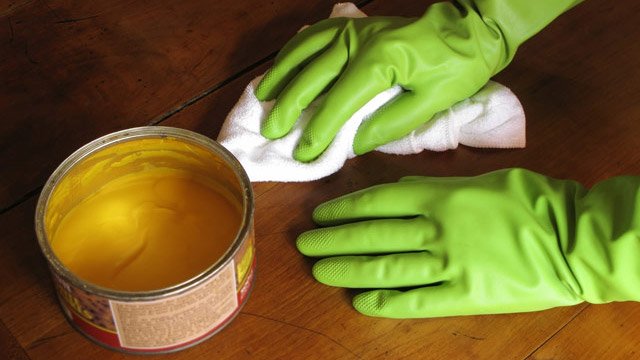
Method 4: Furniture or Car Wax
Wax shows up on every scratch-removal list, and it definitely shouldn’t. Wax can temporarily fill scratches on furniture or cars, but lenses aren’t decorative. You have to see through them.
Trying to look through a layer of wax just creates glare, smearing, and distortion.
Verdict: A hard, greasy pass.
Method 5: Sandpaper
You heard that right. This is a real suggestion people make.
The idea is to grind the lens down to the depth of the scratch, then polish it back to a shine. It can look good. Emphasis on look. But optically? Well you’ve just altered the lens curvature and destroyed all the functional coating.
If your only goal is removing a visible scratch and you don’t care about vision quality, this technically works. If you’d like to keep seeing clearly, put the sandpaper down and step away slowly. If you still need an excuse to use sandpaper, start with building a bookshelf.
Verdict: Effective at ruining lenses. Nothing else.
Method 6: The Only Guaranteed Fix, Replacement Lenses
And now, the moment you’ve been waiting for.
Did you even know this was an option? A lot of people don’t. They assume scratched glasses mean the end of a beloved pair. That is not the case.
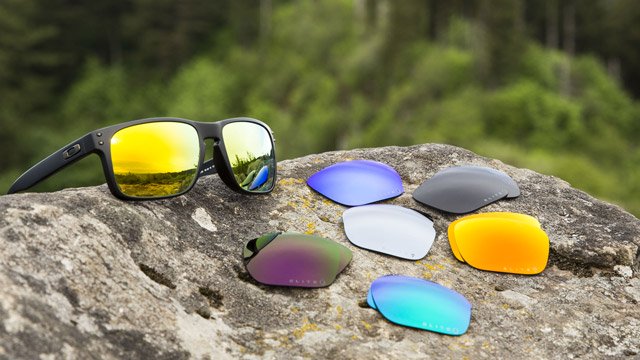
Replacing your lenses is the only guaranteed way to fix scratches while preserving optical clarity, coatings, and protection. It’s also exactly what optometrists recommend when lenses are scratched.
Why Replacement Lenses Just Make Sense
- They cost significantly less than buying new sunglasses.
- It keeps your favorite frames in play.
- You preserve optical clarity and UV protection.
- Installation is quick and easy (here’s a video if you don’t believe us).
- Custom options including polarized, mirrored, photochromic, and clear lenses mean you can upgrade while you replace, often for a fraction of the cost of new glasses.
- Replacement lenses aren’t a workaround, they’re what actually work.
Scratch Prevention: The Real Win
Preventing scratches beats fixing them every time. Here’s how to keep your lenses happy.
- Dry-wiping gritty lenses is one of the fastest ways to scratch them. If there’s one habit to change, make it that.
- Always rinse lenses before wiping
- Use a clean microfiber cloth, never paper towels or clothing
- Store glasses in a hard case when not in use
- Avoid placing lenses face-down
- Keep lenses away from loose sand, sunscreen, and salt crystals
- Clean regularly using lens-safe solutions
Frequently Asked Questions (FAQs)
Can scratches be removed from glasses?
True scratches cannot be removed without removing lens material or coatings. Most DIY methods permanently damage lenses.
Do home remedies work at all?
Only on very minor surface marks, and even then results are temporary and risky. Always test on a small area first.
When should I replace my lenses?
If scratches affect vision, involve coatings, or catch a fingernail, replacement is the safest solution.
Are scratches worse on plastic lenses than glass?
Plastic lenses scratch more easily than glass, but most modern lenses are plastic because they are lighter, safer, and more impact-resistant. Both materials rely on surface coatings that cannot be repaired once they’re damaged.
Do anti-scratch coatings prevent scratches completely?
No coating is scratch-proof. Scratch-resistant coatings help resist everyday wear, but grit, sand, and improper cleaning can still cause damage over time.
Can scratched lenses affect eye strain or headaches?
Yes. Scratches can distort the light and force your eyes to work harder to focus, which may contribute to eye fatigue, headaches, or visual discomfort.
The Guaranteed Fix
Save yourself the time, money, and disappointment of DIY experiments.
Instead, find the right replacement lenses for your frames and bring your favorite sunglasses back from the dead.
Not sure which lenses you need? Find your frame and identify your model (check the inside stem of your frames) in minutes. You can always give us a call, we’re happy to help.
Replacement lenses for top-brand frames like Costa’s Del Mar, Oakley’s Turbine, and 100’s of others arrive quickly and are designed for fast, simple, at-home installation.
Keeping your existing frames and replacing the lenses is often the simplest (and undoubtedly most cost-friendly, effective) option.